

Bladder Stone Treatment In Mumbai | Best Urologist for fast & Safe removal
DR. DILIP RAJA offers advanced bladder stone treatment in Mumbai, providing expert care for safe and effective removal. As a leading urologist, he specializes in minimally invasive and laser treatments, ensuring quick recovery and lasting relief. With decades of experience, Dr. Raja has successfully treated countless patients suffering from bladder stones. If you’re experiencing pain, difficulty urinating, or other symptoms.
Consult Mumbai’s best Urologist Today for Personalized Treatment
Get in touch with us today +91 9820074649
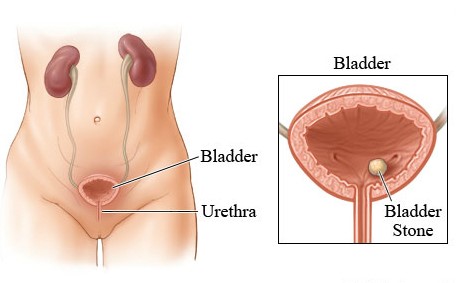
Urinary bladder stones can either travel from the kidney and ureter into the bladder, or they can form in the urinary bladder secondary to an obstruction in the urinary passage.
Causes of Bladder Stone
Bladder stones usually develop when urine stagnates; however, they can also form in healthy individuals without any evidence of anatomical defects, strictures, infections, or foreign bodies. Moreover, the presence of upper urinary tract calculi does not necessarily predispose a person to the formation of bladder stones.
- Bladder outlet obstruction remains the most common cause of bladder calculi in adults.
- Prostatic enlargement.
- Elevation of bladder neck.
- High postvoid residual urine volume cause stasis, which leads to crystal nucleation and accretion
Symptoms of Bladder Stone
The presentation of vesical calculi (urinary bladder calculi) varies from completely asymptomatic to the following symptoms
- Suprapubic pain (lower abdominal)
- Dysuria (pain while passing urine)
- Intermittent flow of urine
- Increased frequency of urination
- Hesitancy
- Nocturia
- Urinary retention
Investigations
- X-ray KUB will show the presence of the stone in the pelvis
- Sonography will show the presence of the stone with clue to formation of bladder stone like enlarged prostate.
Treatment of Bladder Stones
Transurethral Litholapaxy
Doctors perform cystoscopy to evaluate the lower urinary tract, including the urethra and prostate, and to visualize stones in the bladder. If the stone is small, they manually fragment it using forceps and then remove the fragments through the cystoscope.
Percutaneous Suprapubic Cystolithotomy
In cases of larger bladder stones, doctors select the percutaneous suprapubic route. This approach allows them to use shorter and larger-diameter endoscopic equipment, such as a nephroscope with an ultrasonic lithotripter, which enables rapid fragmentation and evacuation of the calculi. Moreover, they often combine the transurethral and percutaneous approaches to stabilize the stone and facilitate irrigation of the stone debris.
Open Suprapubic Cystolithotomy
This procedure has become the preferred mode of treatment for very large or multiple bladder calculi associated with prostate enlargement. Moreover, doctors prefer this approach because it allows efficient removal of stone burden while simultaneously managing urinary obstruction caused by the enlarged prostate. As a result, patients experience quicker relief from symptoms such as urinary retention, pain, and recurrent infections. In addition, the minimally invasive nature of the procedure helps reduce blood loss, shorten hospital stay, and promote faster recovery compared to traditional open surgery.