

10 Symptoms of Enlarged Prostate Every Man Should Know
An enlarged prostate is one of the most common health conditions affecting men over the age of 50. Also known as Benign Prostatic Hyperplasia (BPH), this condition occurs when the prostate gland increases in size and begins to press against the urethra, causing urinary problems.
Recognizing the early symptoms of enlarged prostate can help men seek timely treatment and avoid complications that may affect their quality of life
What Is an Enlarged Prostate?
The prostate is a small gland located below the bladder. As men age, the gland naturally grows larger. When it becomes enlarged, it can narrow the urethra and interfere with the normal flow of urine.
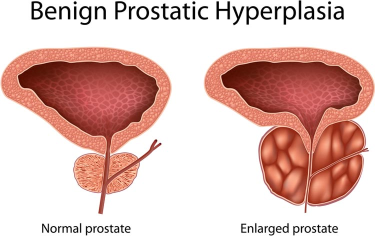
Although BPH is not cancer, it can significantly impact daily life if left untreated.
Symptoms of Enlarged Prostate
Frequent Urination
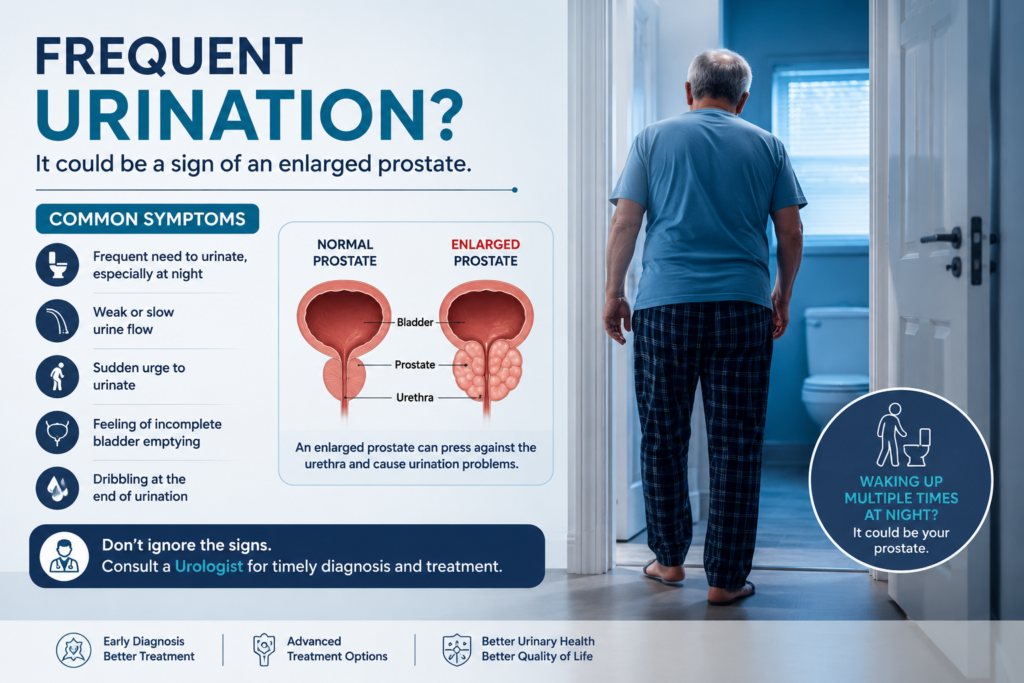
One of the earliest enlarged prostate symptoms is the need to urinate more often than usual.
Many men find themselves visiting the bathroom frequently during the day and night.
Waking Up at Night to Urinate
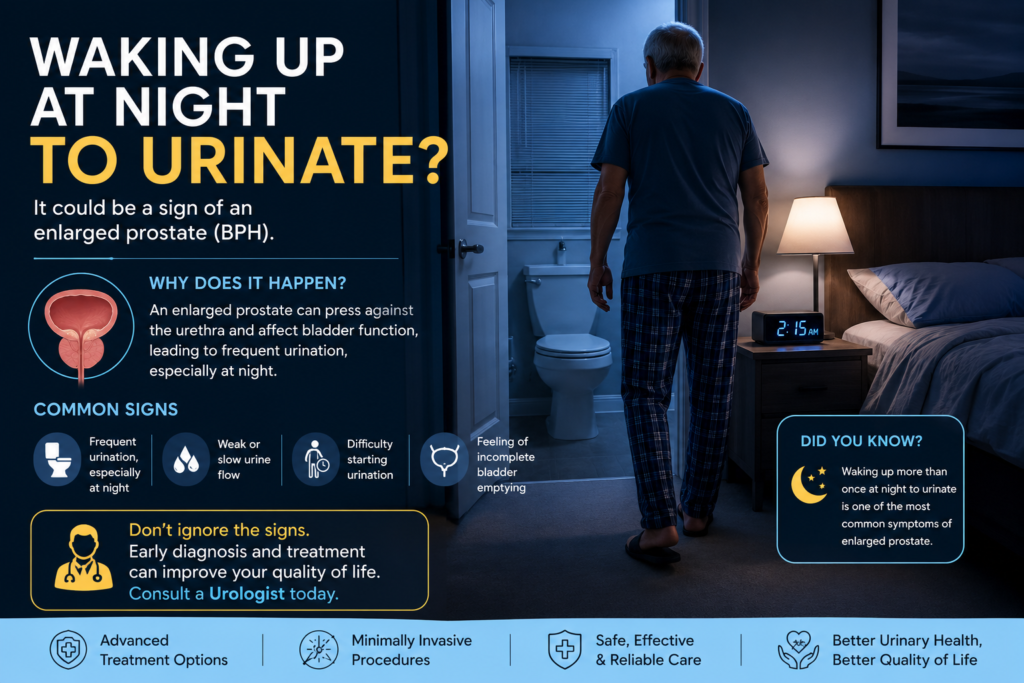
Frequent nighttime urination, known as nocturia, is a common sign of prostate enlargement.
Interrupted sleep can lead to fatigue and reduced productivity.
Weak Urine Flow
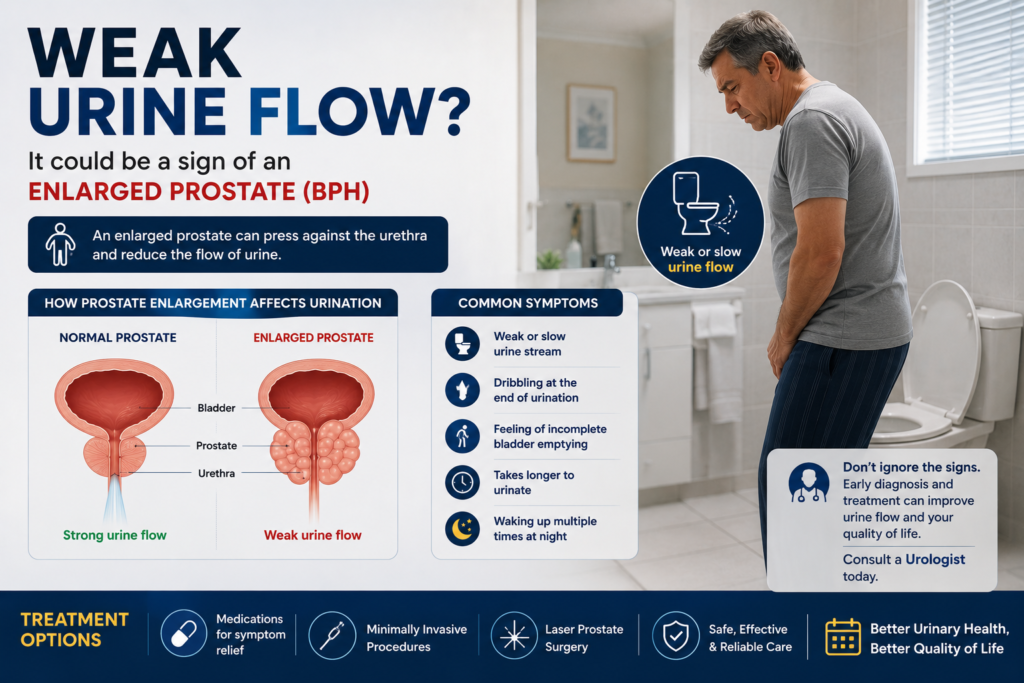
A weak or slow urine stream often occurs when the enlarged prostate compresses the urethra.
This is one of the most recognized signs of enlarged prostate.
Difficulty Starting Urination
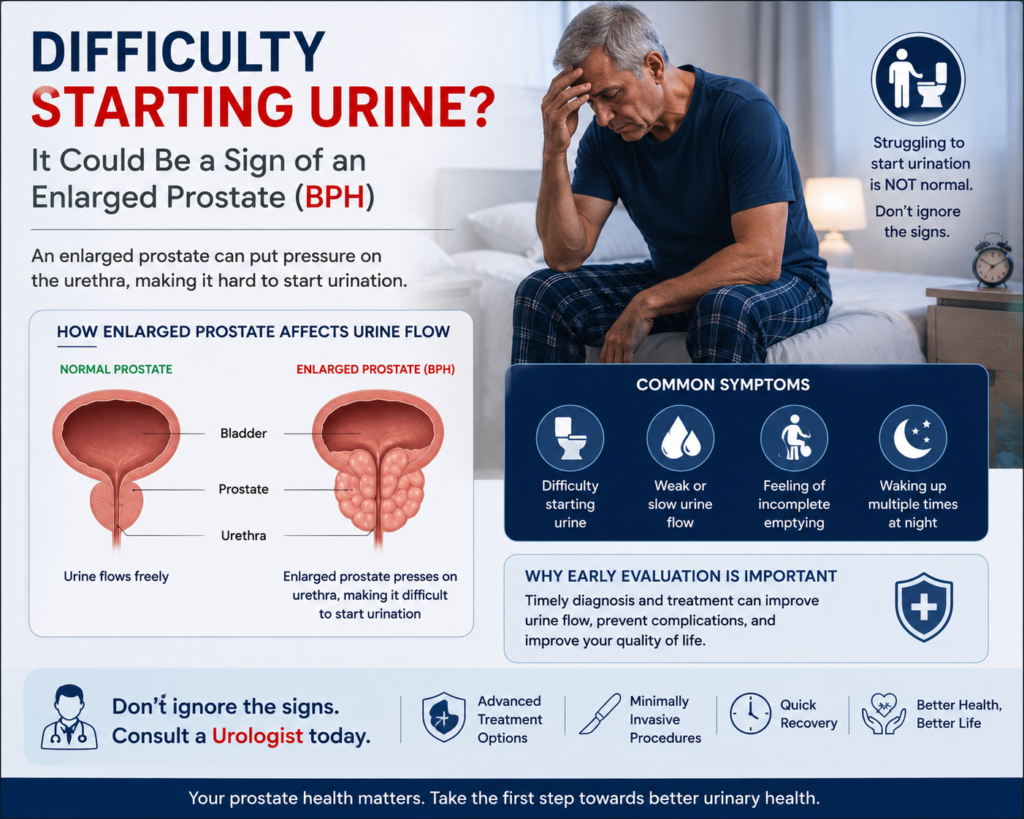
Many men with BPH struggle to start urinating even when they feel the urge.
This symptom may worsen as the prostate continues to enlarge.
Dribbling at the End of Urination
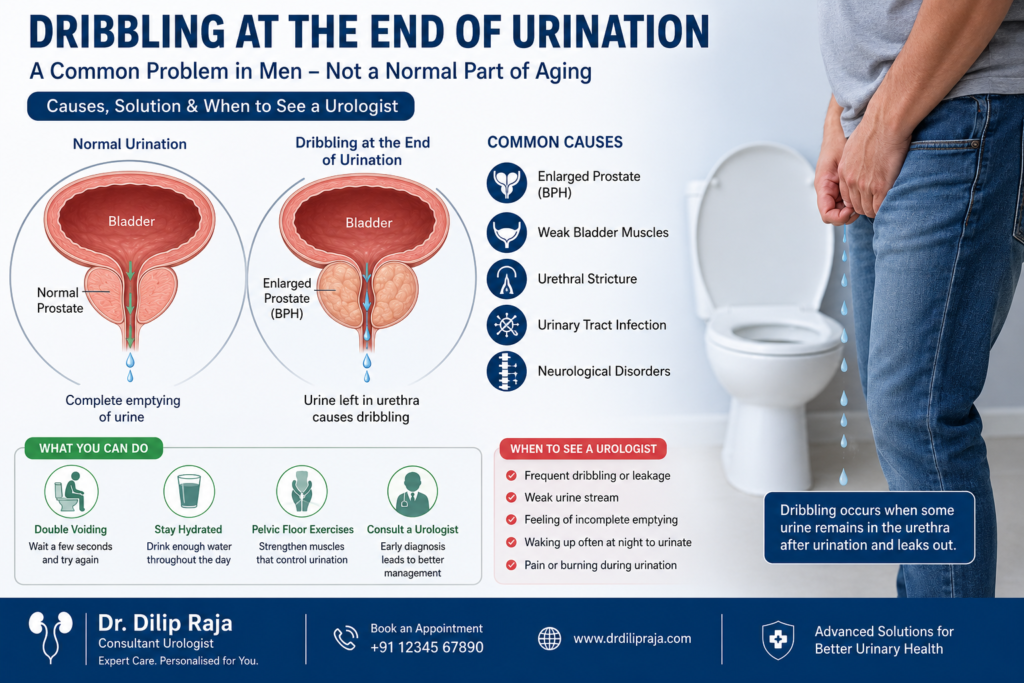
Some men experience urine dribbling after finishing urination.
This occurs because the bladder may not empty completely.
Sudden Urge to Urinate
An enlarged prostate can create a sudden and strong urge to urinate that is difficult to control.
This symptom may interfere with daily activities and travel.
Feeling of Incomplete Bladder Emptying
Many patients feel that their bladder is still full even after urinating.
Incomplete bladder emptying is a common symptom associated with BPH.
Interrupted Urine Stream
The urine flow may stop and start multiple times during urination.
This symptom often indicates increasing obstruction caused by prostate enlargement.
Straining While Urinating
Men may need to push or strain to begin or maintain urine flow.
Persistent straining can place additional stress on the bladder.
Urinary Retention
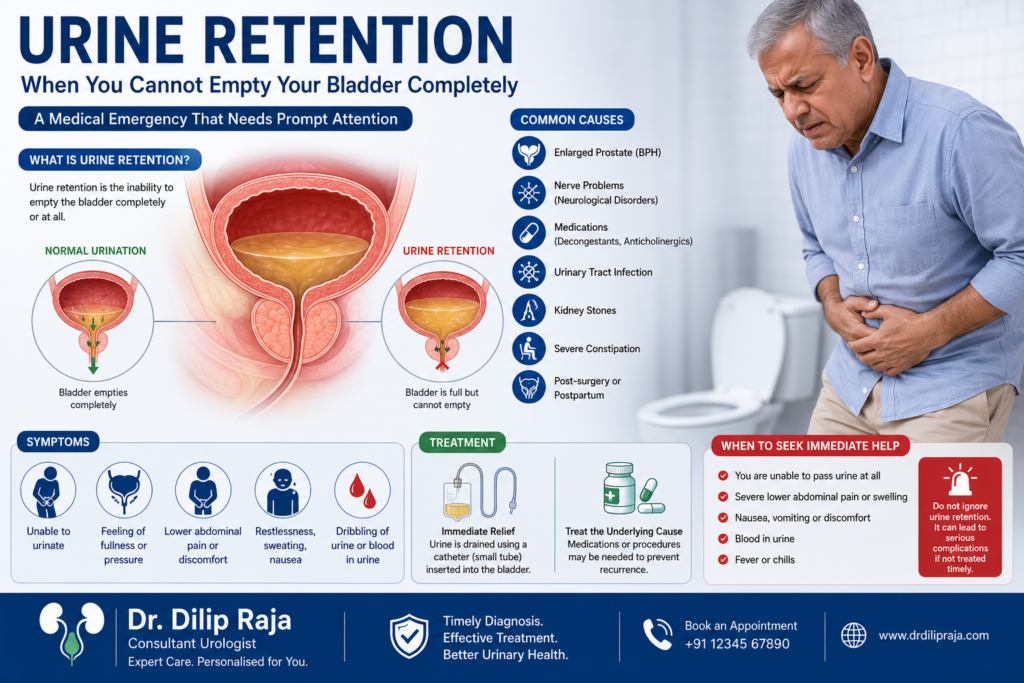
In severe cases, prostate enlargement may prevent normal urination altogether.
Urinary retention requires immediate medical attention
When Should You See a Urologist?
You should consult a urologist if you experience these symptoms of enlarged prostate
- Frequent urination
- Weak urine flow
- Difficulty passing urine
- Blood in urine
- Recurrent urinary infections
- Sudden inability to urinate
Early evaluation can help prevent complications and improve treatment outcomes.
How Is an Enlarged Prostate Diagnosed?
Diagnosis may include:
- Medical history review
- Physical examination
- Digital Rectal Examination (DRE)
- PSA blood test
- Urine analysis
- Ultrasound scan
Accurate diagnosis helps determine the most appropriate treatment plan.
Treatment Options for Enlarged Prostate
Modern enlarged prostate treatment options include:
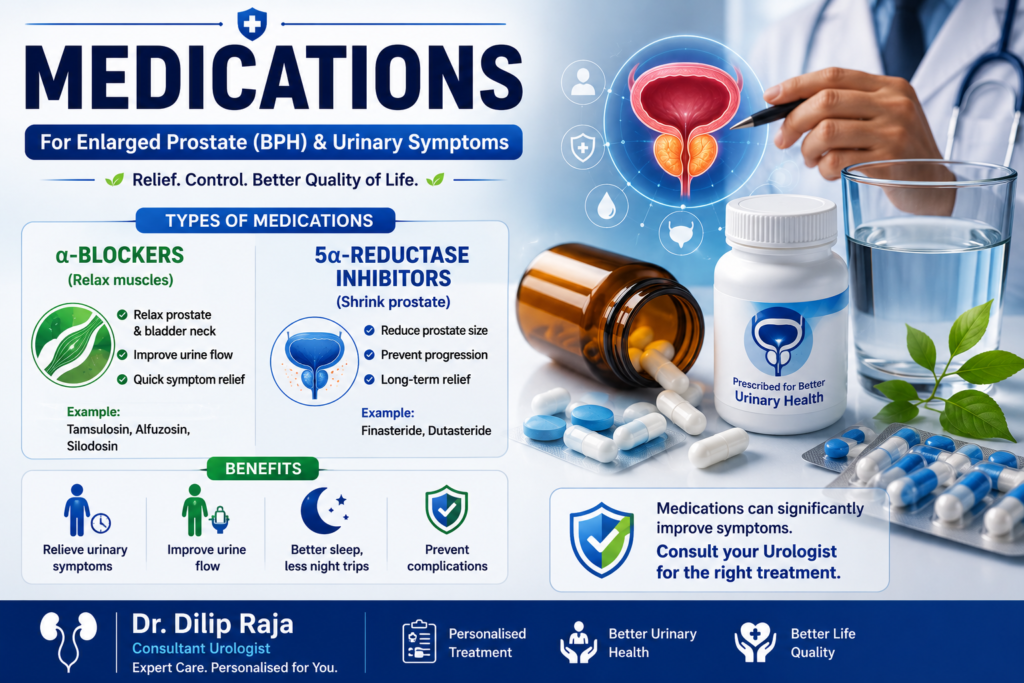
Medications
Medicines can help relax prostate muscles and improve urine flow.
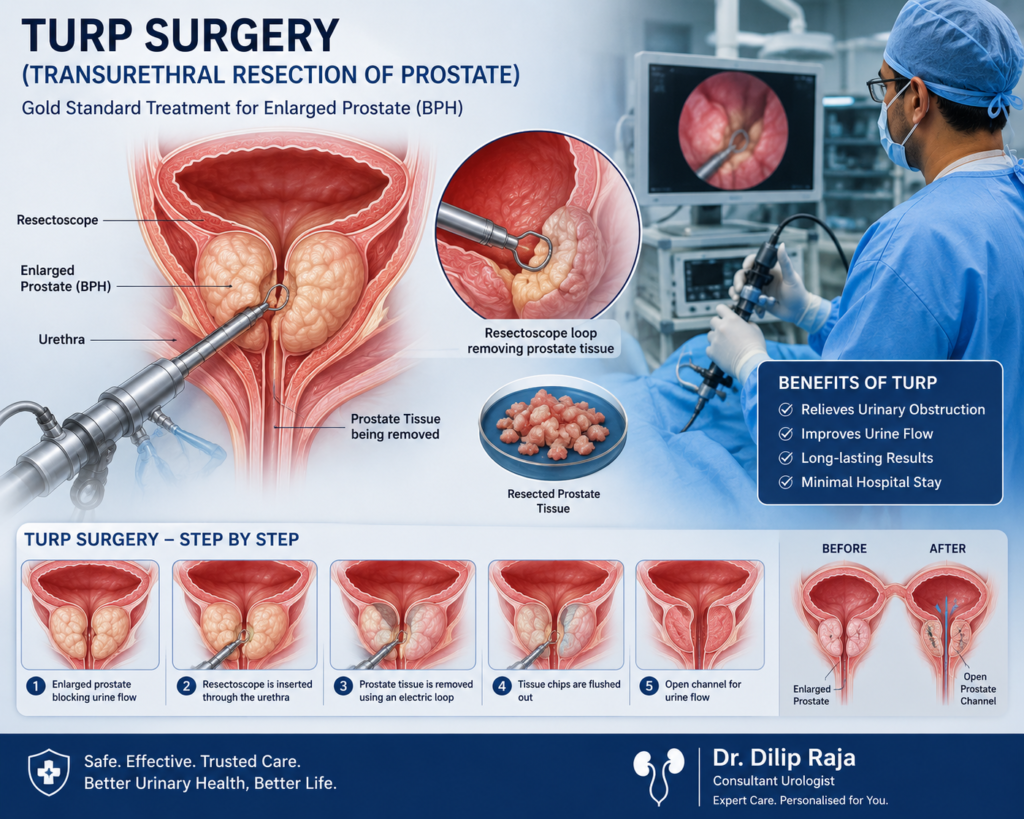
TURP Surgery
A minimally invasive procedure that removes excess prostate tissue.
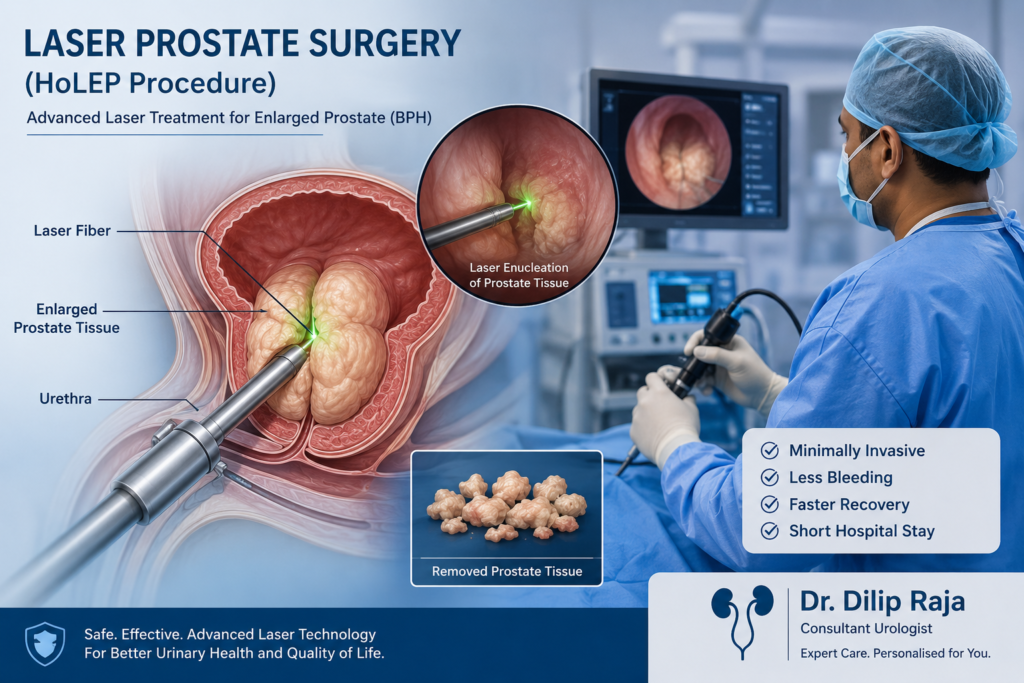
Laser Prostate Surgery
Advanced laser procedures provide effective symptom relief with faster recovery.
How to Maintain Prostate Health
To support long-term prostate health in men:
- Stay physically active
- Maintain a healthy weight
- Limit caffeine and alcohol
- Drink adequate water
- Schedule regular health check-ups
Conclusion
The symptoms of enlarged prostate often develop gradually, making them easy to overlook. Early diagnosis and treatment can significantly improve urinary function and quality of life.
If you experience any signs of prostate enlargement, seeking timely medical advice can help prevent complications and ensure appropriate treatment.